

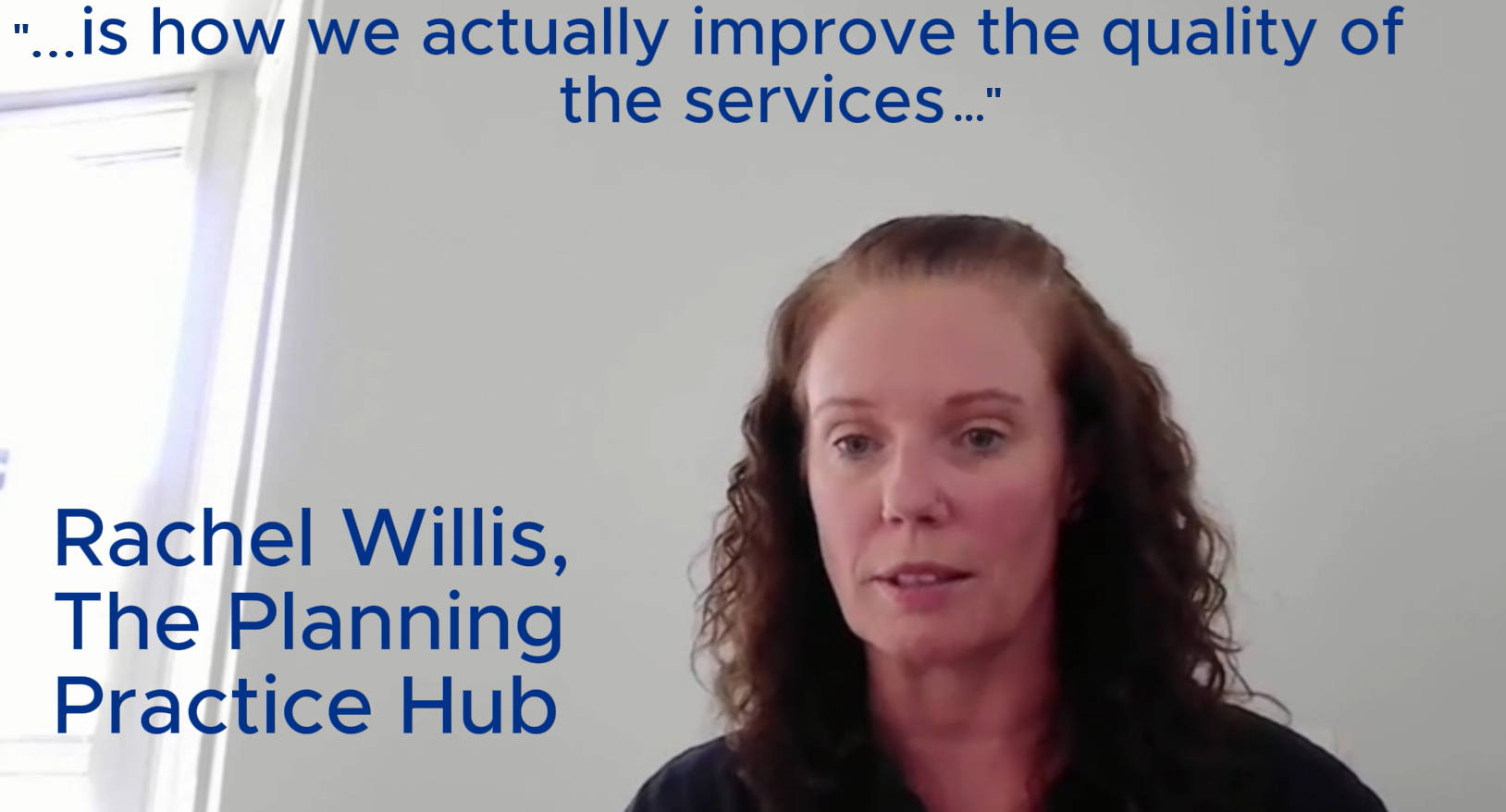
Rachel Willis brings more than 30 years of executive and board-level experience across the NDIS, aged care and broader human services sector. Through The Planning & Practice Hub, she works with providers, peak bodies and community organisations to strengthen governance capability and regulatory readiness.
Her perspective is grounded in lived operational experience — running services, advising boards and navigating reform under increasing scrutiny.
In a recent discussion, one theme emerged clearly: human services are relationship-based sectors — but governance systems rarely see those relationships in real time.
Governance expectations have changed
Over the past decade, governance expectations across human services have shifted significantly.
Boards and executives are no longer expected to rely solely on periodic reporting, annual audits or filtered summaries. Increasingly, regulators expect continuous oversight and evidence-based governance.
Yet most organisations still only see the issues that escalate. That creates a distorted picture of operational reality.
Governance expectations have changed
Over the past decade, governance expectations across human services have shifted significantly.
Boards and executives are no longer expected to rely solely on periodic reporting, annual audits or filtered summaries. Increasingly, regulators expect continuous oversight and evidence-based governance.
Yet most organisations still only see the issues that escalate. That creates a distorted picture of operational reality.
“Most organisations already have the information they need. It’s coming through phone calls, emails and everyday conversations — we just don’t harness it in a way that supports sensible decision-making.”
Leadership often sees:
• Complaints
• Incidents
• Escalations
But rarely sees the everyday signals of service quality, client experience and emerging risk.
The challenge is not policy. The challenge is visibility.
Compliance is demonstrated through practice
A common misconception in human services governance is that compliance is primarily about documentation.
In reality, regulators increasingly expect organisations to demonstrate how they listen and respond to consumer voice.
Most providers rely on mechanisms such as:
• Annual surveys
• Incident reporting
• Complaints registers
• Periodic consultation exercises
Yet every week, thousands of meaningful interactions occur through frontline conversations.
Those conversations often contain early governance signals.
“Those everyday conversations contain the real signals — concerns, frustrations, service feedback. But in most organisations that information never reaches leadership.”
Without visibility into these interactions, governance tends to become reactive rather than proactive.
The untapped intelligence inside everyday conversations
Human services organisations sit on a vast amount of operational intelligence — but much of it remains unstructured.
Every day, conversations reveal:
• Service delivery challenges
• Emerging complaints
• Workforce stress indicators
• Client feedback
• Opportunities for service improvement
Yet most organisations only analyse a small fraction of that information.
“If you can harness the information that comes to you all day, every day through conversations, you suddenly have a powerful decision-making tool.”
When interactions become structured data, organisations can begin to identify:
• Recurring themes
• Early risk indicators
• Service improvement opportunities
• Workforce wellbeing signals
This transforms governance from retrospective investigation to continuous insight.
Listening to the voices that are usually missed
Another challenge with traditional engagement approaches is that they capture only a portion of the population.
Surveys and consultations often reflect the views of the most engaged participants. But many clients and service users never participate in formal engagement processes.
“Often it’s the loudest voices that shape organisational decisions — while the people who don’t participate in surveys or consultations are never heard.”
Routine service interactions — particularly phone conversations — often capture a far broader and more representative view of client experience.
Harnessing those interactions allows organisations to hear every voice, not just the most vocal ones.
From manual notes to structured evidence
Many care organisations still rely heavily on manual case notes and retrospective reporting.
But manual documentation is inherently subjective. It is influenced by:
• Time pressure
• Individual interpretation
• Incomplete recollection
Modern communication systems are beginning to change this dynamic.
“If systems can capture those interactions automatically, compliance stops being a manual exercise and becomes part of everyday practice.”
Structured interaction records can support:
• Stronger governance oversight
• Improved audit readiness
• Earlier identification of emerging risks
• More accurate operational insight
Importantly, this is not about replacing human judgement. It is about supporting it with better information.
Governance must reach the “last mile”
Human services delivery increasingly occurs in dispersed environments.
Support workers, housing officers and care teams often operate independently in homes and community settings.
Without connected systems, organisations carry significant risk across:
• Service quality
• Privacy
• Workforce wellbeing
• Regulatory compliance
Extending governance visibility to the “last mile” of service delivery is becoming essential.
Not for surveillance — but for support, accountability and learning.
The defining capability for human services by 2030
Looking ahead, one capability is likely to define high-performing human services organisations: visibility.
Not dashboards for novelty.
Not technology for its own sake.
But real-time insight into what is actually happening across service delivery.
Organisations that move from fragmented communication and subjective reporting to structured operational insight will be better positioned to:
• Reduce regulatory risk
• Strengthen board oversight
• Improve workforce support
• Deepen client trust
• Embed continuous improvement
In a reform-heavy sector, governance is no longer just about what is written in policy.
It is about what leaders can see — clearly, consistently and early.